Multi-Tenant SaaS Architecture: The Decisions That Are Expensive to Change Later
Most multi-tenancy decisions are cheap to change if caught early and expensive if caught after real customer data depends on them. Here is which is which.
Multi-tenant architecture gets treated as a single decision, isolated or shared, made once at the start of a project. In practice it is a handful of separate decisions bundled under one name, and they do not all carry the same cost if you get them wrong. Some are trivial to change six months in. Others are close to impossible once real customer data is sitting on top of them.
Knowing which is which before writing the schema is most of the actual skill here.
Every table needs a tenant, even when there is only one tenant
The single most consequential decision is also the cheapest one to get right early: does every table that holds customer data carry an explicit tenant identifier, from the very first row.
It is tempting to skip this when there is only one customer, or one internal deployment, because the identifier appears to do nothing. That is exactly the trap. Retrofitting a tenant column onto tables that have been accumulating rows without one means a migration across every table, every query, and every place application code assumed a single implicit tenant, all while the system stays live for the customers already using it. Adding the column from row one costs nothing. Adding it after the fact costs a project.
This was the actual architectural decision behind a self-serve ad platform we built recently: every campaign, placement, and creative is scoped by a site identifier from the first commit, even while only one site exists. The business model, whether the platform operates as one network or licenses out to many independent sites, was left genuinely undecided, because the schema does not care which one gets chosen. That is only possible because the tenant scoping was there from the start, not bolted on once the decision got made.
Isolation strategy is a spectrum, not a binary choice
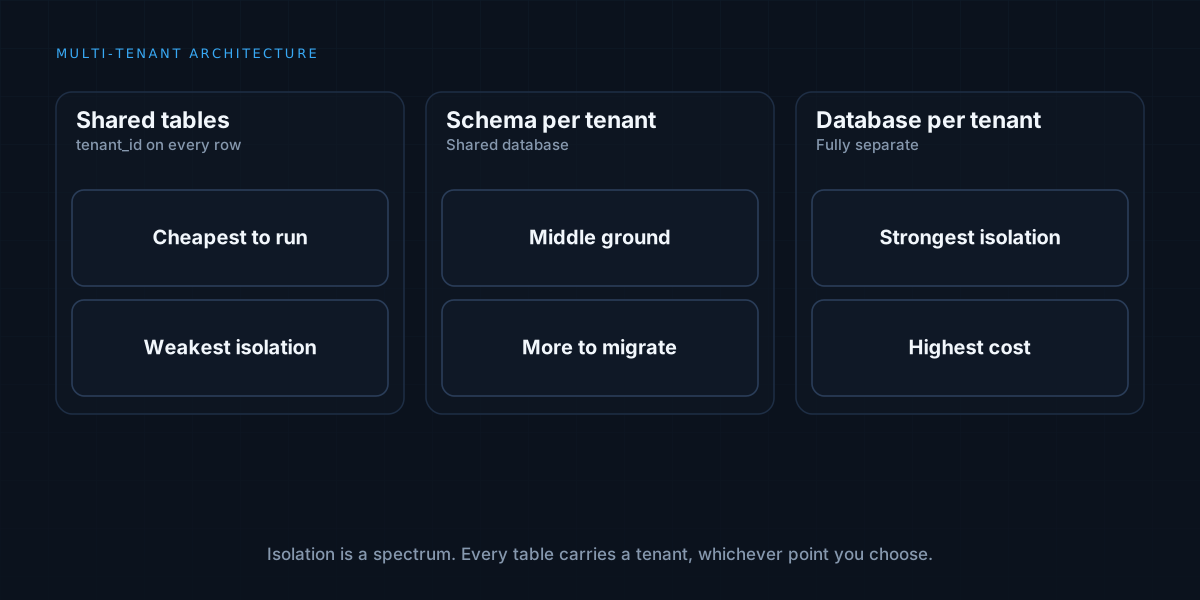
The next decision, how strictly tenants are isolated from each other, is often framed as shared database versus separate database per tenant. The real spectrum has more useful points on it than that framing suggests.
A shared database with row-level tenant scoping, enforced at the query layer, is the right default for most products. It is operationally simple, cheap to run, and perfectly adequate isolation for the overwhelming majority of SaaS use cases. Separate schemas per tenant inside one database add real isolation benefits, mainly around noisy-neighbour performance and the ability to restore one tenant’s data independently, at a real operational cost in migration complexity. Fully separate databases per tenant are usually only justified by a specific compliance requirement that names it explicitly, not by a general sense that more isolation is safer.
The mistake is picking the strictest option by default because it sounds more careful. It usually just costs more to operate, and that operational burden becomes its own source of mistakes, ones a simpler, well-enforced shared model would not have had.
Roles need to exist before they have screens
A related decision that is cheap early and expensive late: defining the roles that will eventually need distinct access, even before those roles have real user interfaces behind them.
The ad platform mentioned above defines three roles in its schema, platform administrator, site administrator, and advertiser, even though only two currently have working screens. That third role costs nothing to leave defined and unused. Adding a genuinely new role later, after permission checks have been scattered through application code with only two roles in mind, means auditing every one of those checks to make sure the new role does not accidentally get access it should not have.
This mirrors the schema-scoping lesson above: the expensive mistake is never having too many roles defined too early. It is discovering a role is needed after the code already assumes there are only two kinds of user.
Payouts, billing, and anything involving money
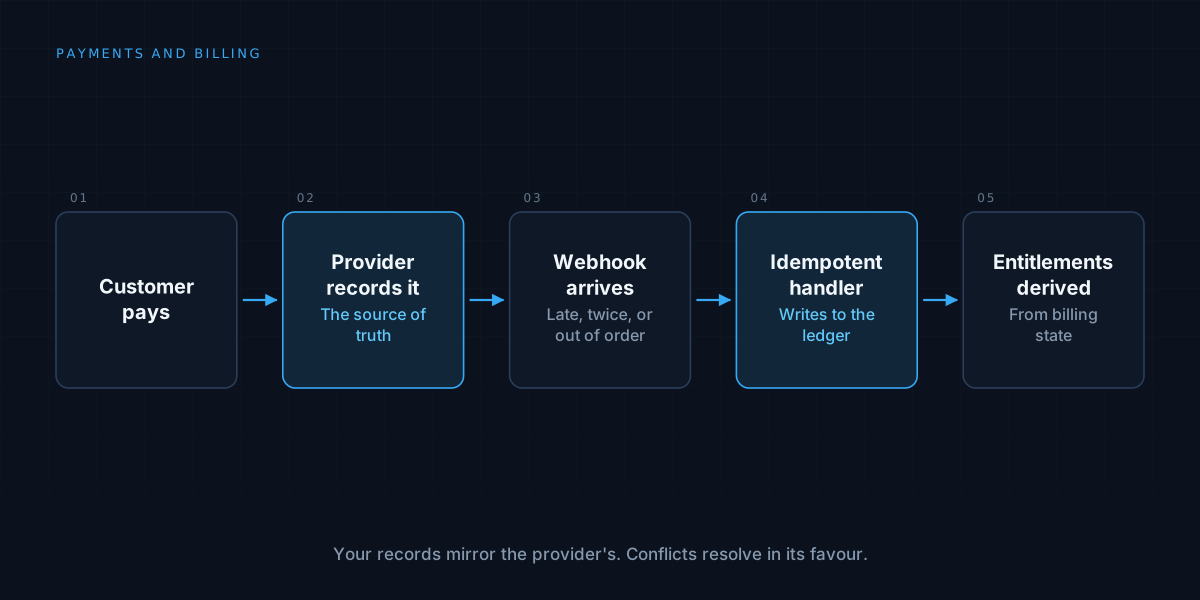
Wherever money moves between the platform and a tenant, the actual payment processing should be treated as commodity infrastructure from day one, the same argument made in build vs buy. What deserves real design attention is the data model describing how much moves and to whom, kept separate from the payment processor’s own logic, so a change in provider or in the business model’s economics is a configuration change rather than a rewrite of how money is tracked.
What this adds up to
None of these decisions are difficult in isolation. Tenant-scope every table. Default to shared infrastructure with row-level isolation unless a specific requirement says otherwise. Define roles before they have interfaces. Keep the economics of money movement separate from the mechanics of moving it. What makes them worth naming explicitly is that every one of them is nearly free to get right in week one and genuinely expensive to fix once real tenants and real data are depending on the assumption already made. The same logic carries to multi-market expansion: factoring per-market logic into adapters from the start is far cheaper than extracting it from core code once a second market actually lands.
We design multi-tenant systems so the business model stays a configuration decision, not an architecture one. See how we approach applications, or read about the case this pattern came from.